

-
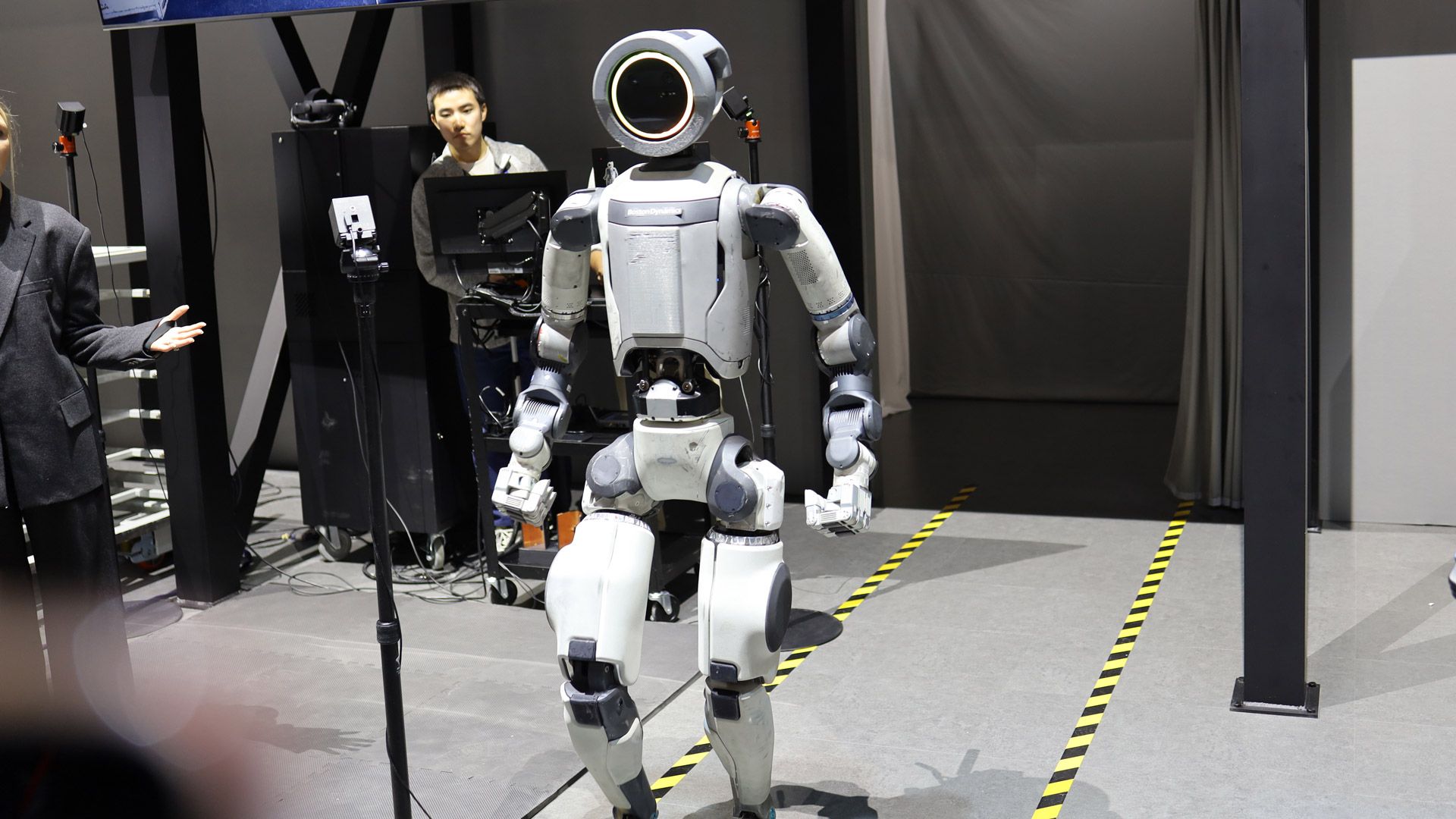
Falling apart at the seams when taken outside tidy assembly lines, robots struggle to cope. Without structured settings, their performance drops fast – suddenly clumsy. Step away from controlled spaces and glitches take over. Real-world chaos trips them up every time. Not built for messiness, they falter where humans adapt easily
-
Microsoft Rho-alpha links language understanding directly to robotic motion control
-
Fingers on a surface know what code cannot guess. Physical touch fills spaces where data falls short. Movement meets meaning through pressure, vibration, texture. Machines learn intent not by logic alone, but by feel. What happens in silence between button press and response matters most
Frequently, robots work just fine where routines stay fixed – factories prove that much. Yet when things shift unexpectedly? Performance drops hard.
Now stepping into the spotlight, Microsoft introduces Rho-alpha – the initial robotics model pulled from its Phi vision-language line – suggesting machines must grasp directions more clearly while improving how they observe surroundings
Operating outside just assembly lines, the company sees machines adjusting as things shift instead of sticking to fixed routines.
What Rho-alpha is designed to do
A machine moves through cluttered space, its steps shaped by code that learns on the fly. This kind of thinking, built into motion, ties back to Microsoft’s take on something people now label physical AI. Instead of fixed rules, responses grow from messy real-world demands. Software adapts, then steers hardware without rigid scripting. Situations unfold unpredictably – yet decisions still follow patterns learned before. With language, perception, and movement working together, it relies less on rigid assembly steps or set directions.
Starting off, Rho-alpha turns spoken directions into robot movements. It handles jobs where two arms must work together, needing close timing plus small adjustments. This setup demands attention to detail, not just power. Coordination becomes key when both limbs act at once. Fine motion matters more than speed here.
What Microsoft describes is a system that goes beyond standard VLA methods, broadening how it takes in sensory data while also deepening its learning sources
“The emergence of vision-language-action (VLA) models for physical systems is enabling systems to perceive, reason, and act with increasing autonomy alongside humans in environments that are far less structured,” said Ashley Llorens, Corporate Vice President and Managing Director, Microsoft Research Accelerator
Now touching gets pulled into the mix right beside sight inside Rho-alpha. Force detection slips in too, still being shaped behind the scenes. Sensing grows beyond just seeing, layer by quiet layer.
Still, how well they work is unclear. These decisions seem aimed at linking artificial smarts more closely to real-world movement.
Focused on tackling scarce real-world robot data – especially tactile feedback – Microsoft builds systems that mimic physical interactions. Instead of waiting for massive datasets, digital environments stand in for actual experiments. Through repeated virtual trials, machines learn responses similar to those needed in reality. Touch-based challenges get met with simulated pressure, texture, motion. These models grow sharper by doing tasks inside controlled spaces. Realistic outcomes emerge without requiring endless hardware testing. Learning happens faster when trial runs repeat in seconds. Physical limits fade when software recreates complex scenarios. Progress comes not just from sensors but from smart substitution.
Out of sight, training paths come alive using trial-and-error methods inside Nvidia Isaac Sim. These digital trails later merge with real-world examples pulled from both store-bought and public collections.
“Training foundation models that can reason and act requires overcoming the scarcity of diverse, real-world data,” said Deepu Talla, Vice President of Robotics and Edge AI, Nvidia.
“By leveraging NVIDIA Isaac Sim on Azure to generate physically accurate synthetic datasets, Microsoft Research is accelerating the development of versatile models like Rho-alpha that can master complex manipulation tasks.”
While systems run, people step in through remote controls. Operators guide actions when needed. Their choices feed back into the software. Over time, it adjusts based on those corrections. Learning happens quietly, shaped by real human decisions made during actual use.
A fresh cycle mixes pretend scenarios with actual experience, shaped by people fixing mistakes – showing how often we now lean on artificial minds when physical examples are too few.
Professor Abhishek Gupta, Assistant Professor, University of Washington, said, “While generating training data by teleoperating robotic systems has become a standard practice, there are many settings where teleoperation is impractical or impossible.”
Follow Jaisblog on Google News and add us as a preferred source to get our expert news, reviews, and opinion in your feeds. Make sure to click the Follow button!