

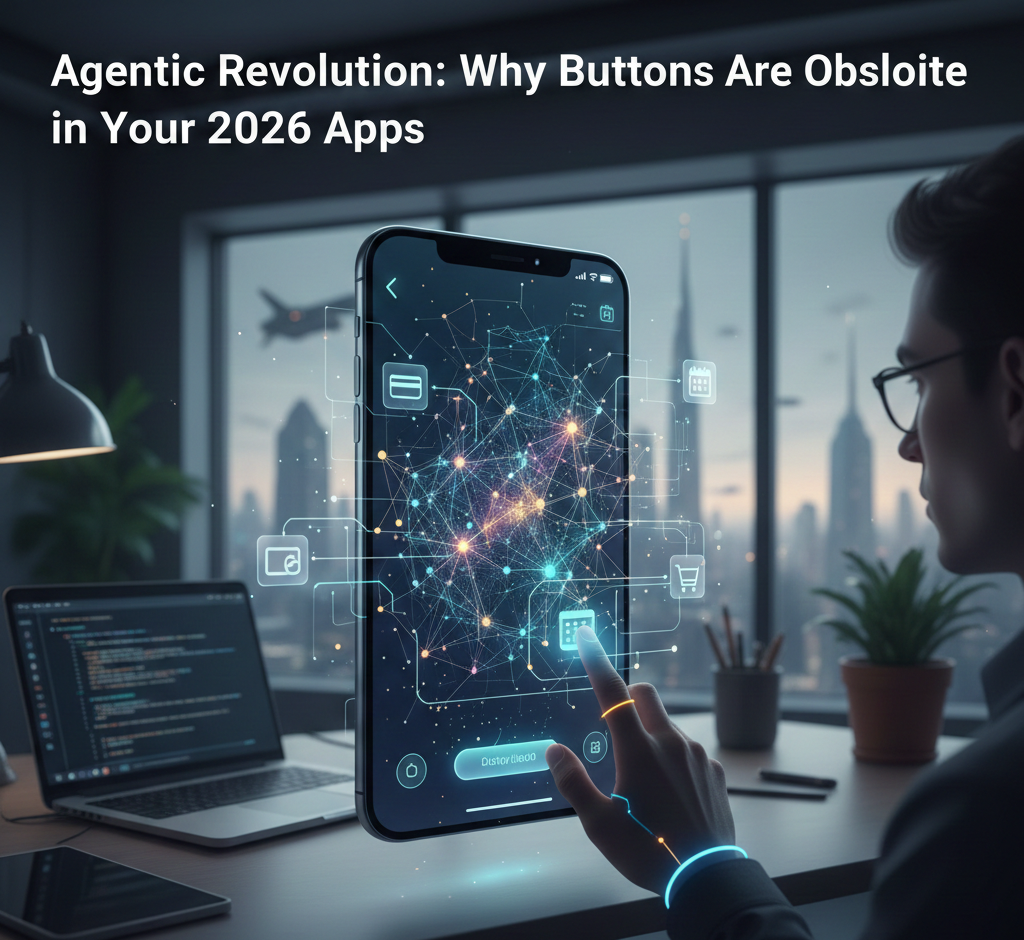
Now things are changing fast in how apps work. For so long, everything meant touching a screen just right. Whether buying a drink or checking money, each move needed a clear tap or swipe. Yet by 2026, that old way fades – slowly replaced by something sharper, smoother, almost like thought itself powers it
The Problem with Buttons in an AI-First World
Every day runs on patterns. Not a single task lives alone; each ties into what came before, what comes next. Your helper knows when you wake, adjusts without asking. But apps? They wait. Always waiting. Even the ones we use constantly refuse to notice. They respond only after – never ahead.
Tapping through a bank app means touching each button – “transfer,” picking accounts, typing numbers, hitting confirm. One touch after another keeps it moving. Imagine if the app noticed the date. First of the month rolls around. Suddenly, it quietly nudges you: shift money to savings. Maybe pay that bill due in two days. Or point out a charge you forgot about. Quiet hints replace constant clicking.
Far from fiction now, life unfolds with smart machines that understand their surroundings deeply. What once seemed imaginary is simply how things are today.
What Exactly Are Agentic Apps?
An agentic app isn’t just an app with AI features; it’s an app where an intelligent agent acts as a central brain, capable of:
- Understanding Intent: Moving beyond literal commands to infer what you want to achieve.
- Proactive Action: Initiating tasks, offering solutions, and completing workflows before you even ask.
- Contextual Awareness: Learning from your habits, location, calendar, and other data points to offer hyper-personalized experiences.
- Autonomous Execution: Performing multi-step tasks without requiring a button tap at every stage.
A single task tracker could watch workloads shift across your team, spotting bottlenecks before they grow. When deadlines start slipping, it quietly forecasts delays instead of waiting for disaster. Messages to clients get drafted automatically, reducing busywork without asking. This isn’t software you push around – it acts more like someone who listens, then steps in. Quiet smarts replace constant oversight. Help shows up mid-process, not after the fact.
The Rise of the Proactive Interface
Change is hitting hard for coders and companies alike. Out goes the old way of building screens based on clear-cut clicks. In comes a shift – crafting flows that follow what users actually mean to do. Instead of rigid steps, systems now bend toward purpose.
- Financial Apps: One tap covers everything. Bills pop up when they’re due, thanks to smart tracking inside the app. A clear button shows up – just confirm if it feels right. Rules you set earlier handle the rest behind the scenes. No hunting through tabs anymore. Decisions happen fast now. The system acts only when conditions match what you chose before.
- E-commerce: Shopping online could get simpler. Instead of scrolling forever, your app may notice what you like. It knows your taste through earlier buys. A suggestion pops up – something picked just for you. Prices from different stores appear side by side because it checks them first. One tap confirms everything. The order goes through without extra steps.
- Productivity Tools: What if your calendar did more than mark hours? It checks how long trips take, picks the best path to arrive on time. When plans shift, it finds a space nearby and reserves it without asking. Time moves fast – your schedule adapts before you do.
Now fading into background noise, the classic button struggles to keep pace. Not designed for today’s flow, it interrupts instead of assists. A relic of older tech habits, it halts momentum where systems should glide forward. What was once command central now feels like a pause sign in motion.
Building for the Agentic Future
For developers, this means a fundamental shift in mindset. We’re moving from “what buttons do users need?” to “what goals do users have, and how can my app achieve them autonomously?”
This requires:
- Robust AI Integration: Leveraging large language models (LLMs), predictive analytics, and sophisticated sensor data.
- Intelligent Workflow Design: Mapping user journeys not as a series of taps, but as a desired outcome.
- Trust and Transparency: Clearly communicating why an agentic app is taking an action and providing easy ways to override or adjust its behavior.
- Ethical AI Development: Ensuring fairness, privacy, and accountability in autonomous actions.
Those building with this new approach will shape what comes next in software. Not carrying every small job themselves means people stay focused where it matters. Machines handle repetitive steps so attention goes elsewhere. This shift puts control back where it belongs – with the person using the tools.
Embrace the Shift: Say Goodbye to the Button
One day soon, things shift. Apps winning favor won’t wait for taps or swipes; they’ll move ahead before asked. Think less poking around, more quiet help. Those stuck with crowded screens full of icons? They start to seem slow, almost clumsy. Time passes, attention wanders, older styles fade without drama.
Imagine shaping tools that act, not just sit there waiting to be poked. Today already runs on silent thinking helpers instead of clumsy taps. What comes next doesn’t need a menu. Smooth moves replace clunky clicks. Life flows easier when apps know what to do. Quiet smarts beat loud interfaces every time. Fewer prompts, more doing. That shift has already started. Watch how little friction matters now.