

Here is why and when Hag Al Laila is celebrated across the UAE and the wider Gulf region
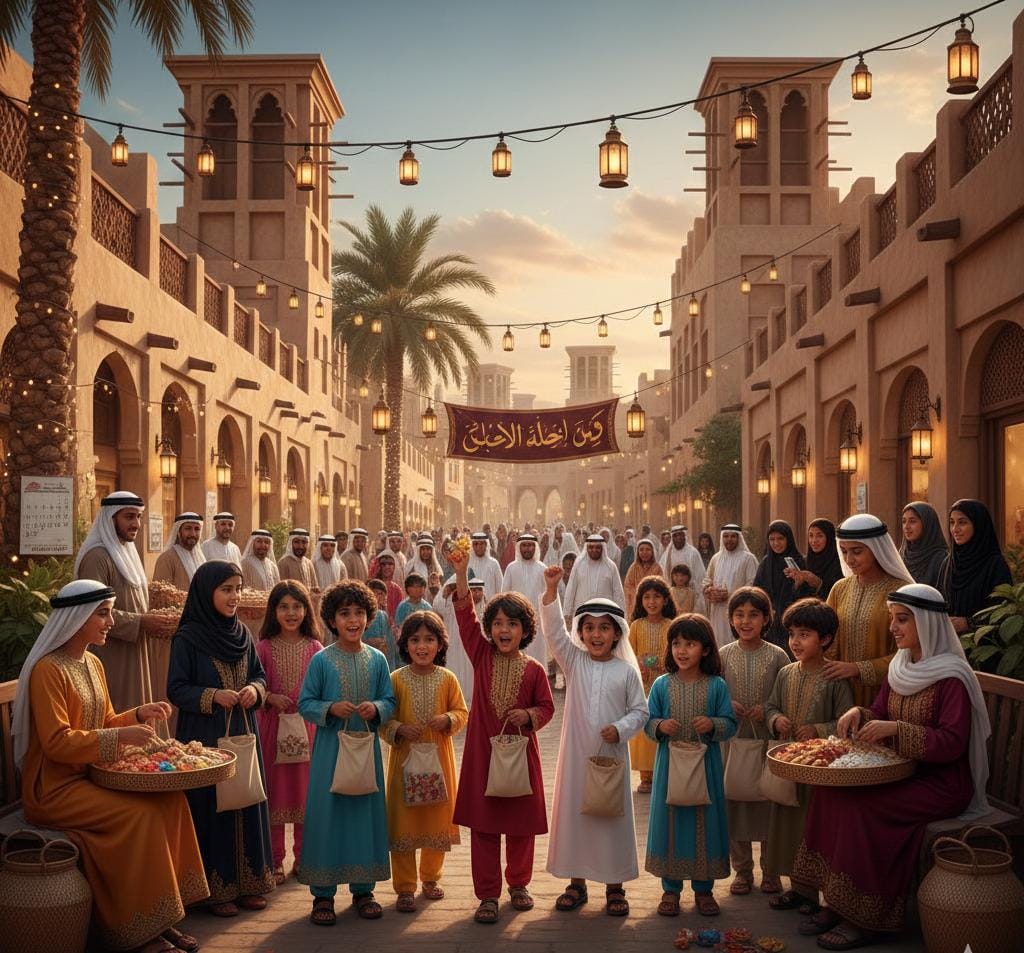
When Ramadan draws near, something cheerful begins to unfold. Across Dubai, kids in cultural attire wander streets with bright baskets woven by hand. Instead of staying indoors, they visit homes, exchanging smiles for candies. Schools see them too, little figures moving in groups. Even at well-known spots around the country, the scene repeats. Not just one or two, but many take part, each step marked by rhythm and light laughter. Their voices rise gently between buildings. Tradition walks beside them, quiet yet clear.
This joyful event goes by the name Hag Al Laila, an old Emirati custom unfolding in the weeks before Ramadan begins. While many look forward to it each year, its roots stretch back generations, quietly shaping community moments. Not tied to grand displays, it lives through small gatherings where stories pass easily among neighbors. As days shorten ahead of fasting season, people meet under softer lights, sharing time without hurry. Even without fanfare, the rhythm feels familiar to those who’ve grown up within it.
Though tied closely to Emirati tradition, Hag Al Laila has echoes through the Gulf region. Qatar marks it as Garangao, while Bahrain uses Gergaoon instead. Oman follows with a name of its own – Garangesho. Over in Kuwait and Saudi Arabia, people say Gargean when they speak of this night.
What is Hag Al Laila?
Hag Al Laila? That’s a kids’ event kicking off the quiet readiness for Ramadan. Says Sara Yousef, who shares culture stuff at SMCCU – this moment matters more than it might seem. Tradition wraps around it, slow and steady.
“Hag Al Laila is a traditional Emirati children’s celebration that happens before the holy month of Ramadan, and it is a happy occasion that reflects values of generosity, community, and preparing spiritually and socially for Ramadan,” she explained.
When is Hag Al Laila celebrated?
“Hag Al Laila is celebrated on theeve of the 15th of Sha‘ban, the eighth month in the Islamic calendar,which usually falls two weeks before Ramadan begins. Hag Al Laila is one of the events in the Season of Wulfa, a time associated with closeness, kindness, and strengthening social bonds,” Yousef said.
Midway through spring comes The Season of Wulfa – a stretch shaped by Emirati roots and Muslim faith. Not just dates and prayers, it thrives on quiet moments between people. As Hag Al Laila fades, its spirit slips into days of fasting under warm skies. Then slowly, kindness shows up in open homes during Ramadan nights. By the time Eid Al Fitr lights the streets, what began softly has grown into something felt, not explained.
How is Hag Al Laila celebrated in the UAE?
Through the night is what Hag Al Laila means, pointing to gatherings when darkness falls. Evening marks the start, right after Maghrib prayer lights up mid-Sha‘ban days. Celebrations stir once prayers end, rooted deep in timing passed down generations.
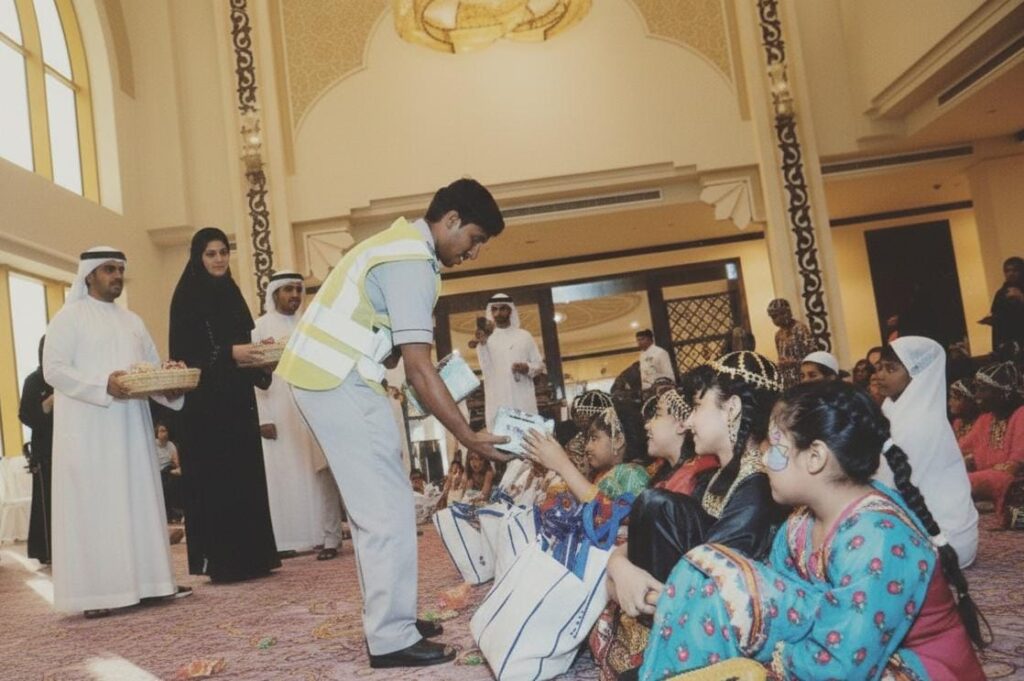
“Children are at the heart of Hag Al Laila. Dressed in traditional clothing, they go door to door in their neighbourhoods singing special songs and receiving sweets, nuts, and small treats that they collect in cloth bags,” Yousef said.
Outside houses, kids call out “Atoona Hag Al Laila” – asking for treats meant just for this night. As they move from door to door, their vivid straw pouches grow heavier, thanks to local families joining in. Colourful threads swing while small hands collect what’s offered: sugar drops, almonds, bits of sweetened fruit. Each step brings more into those handwoven sacks, filled slowly by shared custom.
Fried dumplings dripping with date honey show up at home when families gather – luqaimaat, a treat saved for big moments like weddings or Eid. These sweets appear only when something matters.
“Hag Al Laila was a simple, neighbourhood-based celebration, with whatever sweets were available to be shared,”
“Hag Al Laila is a reminder that Emirati culture has always placed children, community, and generosity at its center. Even as the country has modernized, these moments of shared joy continue to connect generations and keep cultural memory alive.”
Sara Yousef, Cultural Presenter at the Sheikh Mohammed Centre for Cultural Understanding (SMCCU)